
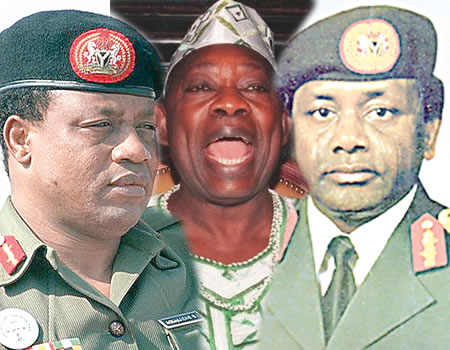
Former Nigerian military ruler, General Ibrahim Babangida (IBB), has once again reignited debates over one of the most controversial moments in Nigeria’s history—the annulment of the June 12, 1993, presidential election. His recently published memoir, Journey in Service, attempts to provide his version of events, but critics argue that it serves more as a defense rather than a full disclosure of the truth. The reactions from critics, civil society organizations, and political analysts reflect the lingering wounds of that annulment and its impact on Nigeria’s democracy.
The Memoir and Its Controversial Claims
In Journey in Service, IBB acknowledges that MKO Abiola won the June 12 election but distances himself from the annulment decision, suggesting that external forces within the military and political elite pressured him into annulling the results. He claims that security concerns and political instability justified the decision, a rationale that has been met with widespread skepticism.
Despite admitting to the annulment, IBB defends his legacy by highlighting his contributions to Nigeria’s development. However, critics argue that the memoir is filled with contradictions, particularly his earlier claims during the annulment announcement that the election was not free and fair—an assertion that clashes with his latest admission that Abiola won legitimately.
Historical Reactions and the Role of the Deep State
The book’s release has sparked outrage among historians and political commentators, who view it as an attempt at historical revisionism. Many believe that IBB is attempting to shift the blame onto deceased individuals like General Sani Abacha, who took power after his resignation. This strategic deflection, according to analysts, allows him to evade full accountability while shaping his legacy in a more favorable light.
The discussion surrounding IBB’s memoir also highlights the influence of the “deep state” within Nigeria’s military and political structures. Some argue that Babangida may not have had full control over decisions made during his tenure, yet others believe that he was the mastermind behind events that eventually led to Abacha’s rise to power.
The Political and Social Consequences of the Annulment
The annulment of the June 12 election plunged Nigeria into chaos. Nationwide protests, violent crackdowns, and the eventual arrest of MKO Abiola led to a period of military repression that lasted until 1999. The election is widely regarded as Nigeria’s freest and fairest, with Abiola securing 8.1 million votes and winning in 21 out of 31 states.
Critics argue that Babangida’s refusal to take full responsibility for the annulment adds to Nigeria’s history of impunity among its political elite. Many victims of the military’s brutal suppression of protests following the annulment remain uncompensated, and key questions about the period remain unanswered.
Accountability and the Need for Historical Documentation
A major point of discussion raised in response to IBB’s memoir is the importance of historical documentation. Nigeria has had several past leaders who have refused to document their time in office, notably former President Muhammadu Buhari. Critics argue that while Babangida’s memoir may be flawed, it at least provides a version of events for historical records. The challenge remains in ensuring that history is not rewritten by those who wield the power to shape narratives.
Many Nigerians continue to call for a full and honest account of the annulment, demanding that those responsible be held accountable. Some suggest that Babangida should have used his memoir to offer an unfiltered confession rather than a carefully curated defense.
The Long-Term Impact on Nigerian Democracy
The annulment of the June 12 election left a lasting impact on Nigeria’s democratic evolution. It demonstrated the vulnerability of democratic processes to military interference and set a dangerous precedent. While Nigeria has been under civilian rule since 1999, electoral irregularities and political manipulations persist, raising concerns about the country’s democratic maturity.
Babangida’s memoir has once again brought June 12 into the national consciousness, reminding Nigerians of the importance of electoral integrity. It also serves as a cautionary tale on how history can be manipulated by those who have the means to publish their own version of events.
Conclusion
IBB’s Journey in Service is more than just a memoir—it is a controversial attempt to reshape history. While it has provided insight into his perspective, it fails to offer full accountability for the annulment of the June 12 election. The debates surrounding the book underscore the need for Nigeria to confront its past honestly and ensure that future leaders are held to higher standards of transparency and responsibility.
As the discussions continue, one key question remains: Will Nigeria ever achieve full closure on June 12, or will it remain a contested chapter in the nation’s history?
 BRYMO'S TAKE
Leave a comment