
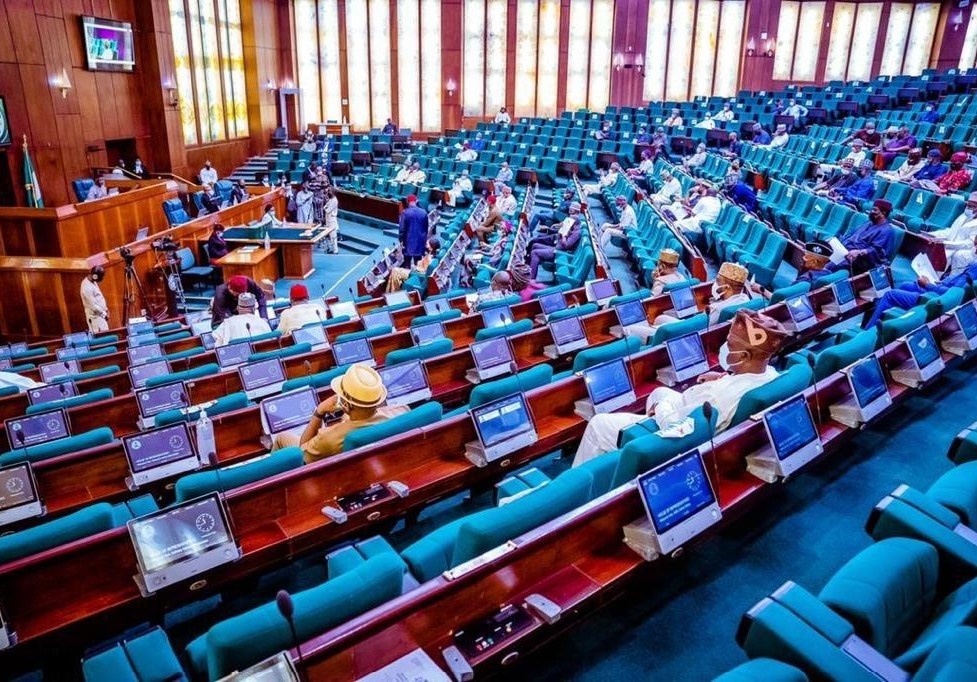
In a recent session, Nigeria’s House of Representatives voted down a bill that sought to amend the 1999 Constitution by expanding the scope of Islamic law beyond personal matters. Sponsored by Aliyu Misau, a representative from Bauchi State, the bill proposed to remove the term “personal” from several constitutional sections, thereby enabling Islamic law to be applied more broadly. Misau argued that current restrictions hinder the application of Islamic commercial law, which has grown increasingly relevant with the establishment of Islamic banks like Jaiz Bank.
The bill aimed to amend sections 24, 262, 277, and 288 of the constitution by eliminating the word “personal” in relation to Islamic law. Section 262(1) currently grants the Sharia Court of Appeal appellate and supervisory jurisdiction over civil cases involving Islamic personal law, which covers family matters such as inheritance and marriage. By removing “personal,” Misau sought to extend Sharia law to include Islamic commercial and international law, particularly in areas like contracts and business disputes.
The debate reflected a clear regional divide, with Northern lawmakers largely supporting the bill while Southern representatives opposed it. Northern supporters argued that expanding Sharia would help sustain Islamic commercial law, which could benefit Nigeria’s financial sector. Lawmakers like Abdulhakeem Ado from Kano State emphasized the need for a broader scope to support business development in Muslim-majority regions.
However, opposition voices, particularly from Southern Nigeria, argued that removing “personal” could lead to unintended consequences. Southern lawmakers argued that the framers of the 1999 Constitution were deliberate in restricting Sharia law to personal matters to maintain Nigeria’s secular identity. Awaji-Inombek Abiante of Rivers State warned that the proposed change could lead to an expansion of Islamic law into areas that could infringe on Nigeria’s secular framework, risking potential conflicts and widening religious divisions.
The roots of the debate trace back to earlier constitutional assemblies where similar discussions about the role of religion in law generated intense debate. Proponents of the existing framework pointed out that the 1979 Constitution, which formed the basis for the 1999 Constitution, limited Sharia to personal matters. At that time, the military halted further discussions on expanding its scope due to concerns about maintaining Nigeria’s secular state status.
Lawmakers opposing the amendment expressed concerns about violating Nigeria’s Constitution, which, as the fundamental law, requires that all other laws remain subordinate to it. Critics also pointed out that broadening Sharia law could infringe on the rights of non-Muslims and potentially violate international human rights agreements Nigeria has ratified. Lawyer Kola Alapinni argued that the bill could infringe on fundamental rights guaranteed by the constitution, a perspective shared by other legal professionals and human rights advocates.
Since 1999, twelve Northern states in Nigeria have implemented Sharia law to varying degrees, establishing Sharia Courts of Appeal and institutions like the Hisbah, or religious police. While Sharia law was intended to apply only to Muslims, there have been instances where non-Muslims have faced pressure to conform to certain Sharia-based rules, particularly regarding alcohol and public behavior. Human Rights Watch and other organizations have documented cases where Hisbah officers imposed physical punishments, despite legal provisions that limit their jurisdiction.
Nigeria’s secular structure and complex religious landscape continue to present challenges in balancing legal frameworks with diverse beliefs. In a recent letter, lawyer Kola Alapinni emphasized that expanding Islamic law could open the door to sectarianism, destabilizing a delicate balance in Nigeria’s pluralistic society. Alapinni referenced ongoing cases challenging the constitutionality of certain Sharia practices in Nigeria, including the landmark case of Yahaya Sharif-Aminu, a musician sentenced to death for blasphemy. Alapinni’s legal team argued that Sharia penal codes, as applied in Northern Nigeria, conflict with constitutional and international human rights obligations.
As Nigeria grapples with its dual legal system, balancing religious laws within the secular framework will remain a contentious issue. The rejection of Misau’s bill highlights the sensitivity surrounding religious laws in Nigeria’s diverse society. While Islamic law has a place in Nigeria’s legal landscape, expanding its scope beyond personal matters would require careful deliberation, considering both constitutional principles and Nigeria’s commitment to human rights. As Nigeria continues to evolve, its legal system will likely face ongoing challenges in accommodating its diverse cultural and religious landscape.
 BRYMO'S TAKE
Leave a comment