
Image Source: THE IRISH Sun
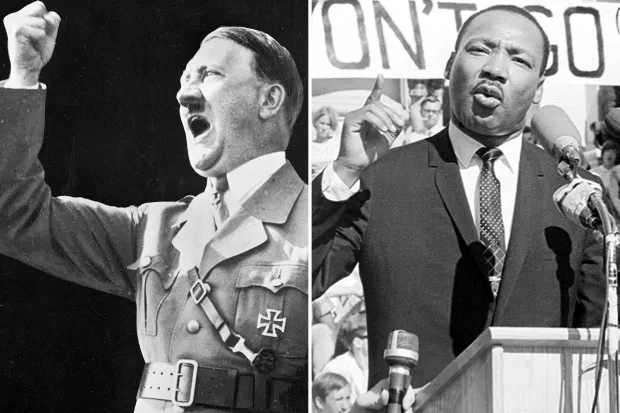
In the accounts of history, few figures stand out as prominently as Martin Luther King Jr. and Adolf Hitler. Their names evoke vastly different emotions and associations, yet both were masters of oratory, employing the power of speech to influence the course of nations. While King’s speeches stirred hope and inspired change, Hitler’s rhetoric fanned the flames of hatred and led to unspeakable atrocities. Their oratory skills shaped their leadership, albeit for vastly different ends.
Martin Luther King Jr. epitomized the transformative potential of oratory for good. His impassioned speeches were the driving force behind the American Civil Rights Movement, igniting a flame of change that continues to burn bright today. King’s oratory prowess was not merely about delivering words but about hope, justice, and equality. He used his voice to advocate for racial equality and non-violent resistance, inspiring millions to fight for justice and articulating a vision of a more harmonious America.
King employed a masterful blend of biblical references, historical allusions, and poetic language. His rhythmic, cadenced delivery resonated with audiences, amplifying the emotional impact of his message. The iconic “I Have a Dream” speech stands as a testament to his ability to stir hearts and minds with his words.
In stark contrast, Adolf Hitler’s oratory skills were wielded as weapons of destruction and manipulation. His speeches were a potent tool for propaganda, used to spread venomous ideologies and incite mass hysteria. Hitler’s words were not meant to heal wounds or unite people; they were meant to divide, demonize, and conquer. He used his speeches to spread hatred, scapegoat minority groups, stoke nationalism, and rally the public for war and conquest.
Hitler employed a forceful, aggressive speaking style punctuated by fervent gestures and dramatic pauses. He relied on repetition, emotional appeals, and inflammatory language to incite fear and anger, manipulating the masses to his will. His ability to captivate audiences through his words played a crucial role in his rise to power and the execution of his tyrannical agenda.
King promoted unity, equality, and justice, envisioning a society where all could live in harmony. Hitler preached division, hatred, and violence, sowing seeds of discord and destruction wherever his words reached. While King relied on moral persuasion and non-violence, appealing to the inherent goodness and decency of humanity, Hitler used manipulation and intimidation, exploiting fear and ignorance to further his objectives.
King’s oratory helped achieve lasting social change, paving the way for a more equitable and just society. Hitler’s speeches fueled one of the darkest chapters in human history, leaving a legacy of devastation and despair in their wake. The contrast between these two figures underscores the profound impact a leader’s words can have in shaping the course of history, for better or worse.
Martin Luther King Jr. and Adolf Hitler may have been charismatic leaders who wielded the power of oratory, but their legacies could not be more divergent. While King’s words inspired hope and propelled movements for positive change, Hitler’s rhetoric plunged the world into darkness and despair. Their lives serve as an absolute reminder of the profound influence speech can have. As we reflect on their contrasting legacies, let us reaffirm our commitment to using the power of speech for the greater good, striving to build a world where justice, equality, and compassion reign supreme.
 BRYMO'S TAKE
Leave a comment