
When it comes to sheer complexity and scale, two things often vie for the title of “largest machine built by humans”: the North American Power Grid and the Internet. Both are extensive networks, vital to modern life, and constantly evolving. But which truly deserves to be regarded as the “largest machine built by humans”?
The Power Grid: A Work of Steel and Electricity
Spanning millions of square miles, the North American Power Grid hums with an invisible energy, connecting countless homes, businesses, and industries. Its vast infrastructure includes:
- Power plants: From nuclear towers to hydroelectric dams to solar farms, they generate electricity in diverse ways.
- Transmission lines: These high-voltage lines carry electricity across vast distances.
- Substations: They transform voltages and transmit power efficiently.
- Control systems: A complex web of technology monitors and manages the entire grid in real-time.
The grid’s size and interconnectedness are overwhelming. Millions of miles of lines, hundreds of thousands of generators, and countless substations work in sophisticated synchronization. Any minor disruption can have cascading effects, as seen in major blackouts.
The Internet: A Web of Information and Connection
The internet, a global network of data and communication, connects billions of people and devices. Its extensive infrastructure includes:
- Servers: Powerful machines storing and processing information.
- Data centers: Vast facilities housing these servers.
- Undersea cables: Transmitting data across oceans at extraordinary speeds.
- Fiber optic networks: High-bandwidth links connecting continents.
While technically not a single machine, the internet exhibits machine-like properties. It routes data packets intelligently, adjusts to traffic demands, and constantly evolves. Its reach shadows the physical grid, connecting nearly half the world’s population.
So, Which Wins?
It’s not a simple answer. Both the power grid and the internet are immense achievements, defying easy comparison. Here’s a breakdown:
- Size: The internet clearly leads global reach and device connections.
- Complexity: Both are incredibly sophisticated networks, but the physical constraints of power transmission give the edge to the grid.
- Interconnectedness: While the internet connects globally, the grid’s regional interdependencies create a different kind of complexity.
Ultimately, both are marvels of human ingenuity, serving different but equally essential purposes. The power grid keeps our lights on and industries humming, while the internet connects us and fuels the information age. These two are not competitors but rather complementary infrastructures, shaping our modern world in profound ways.
The Future
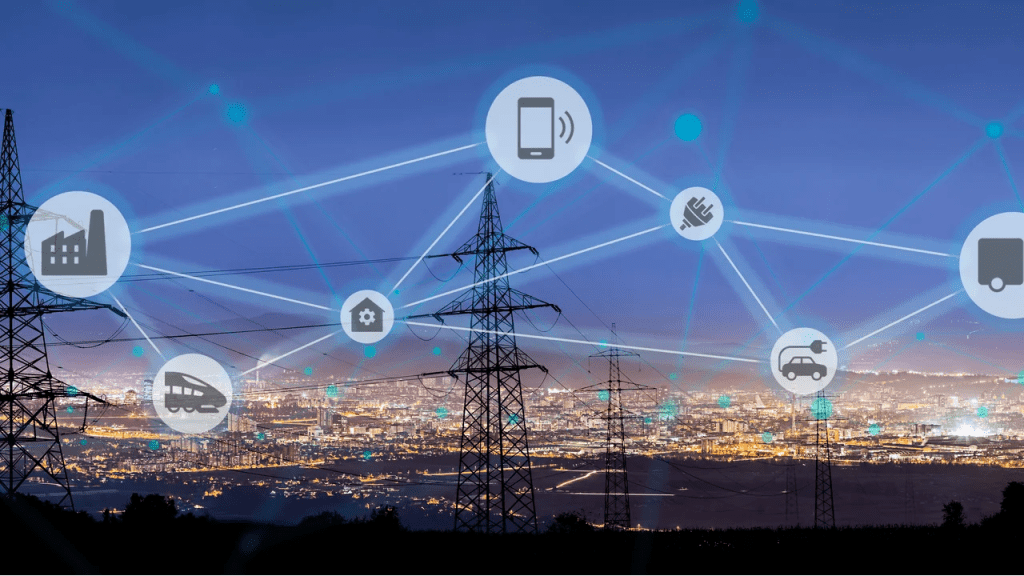
Smart Grid. Source: http://www.power-technology.com
Both the power grid and the internet face increasing demands and require constant improvements. Integrating renewable energy sources into the grid and ensuring internet security are pressing challenges. Utilizing the power grid and the internet harnesses the respective assets to unlock new possibilities. A smart grid can leverage the internet’s intelligence for optimized energy flow or a secure internet powered by renewable energy generated by the grid. The future belongs not to only the power grid or the internet, but to the synergistic evolution of these interconnected systems.
 BRYMO'S TAKE
Leave a comment