
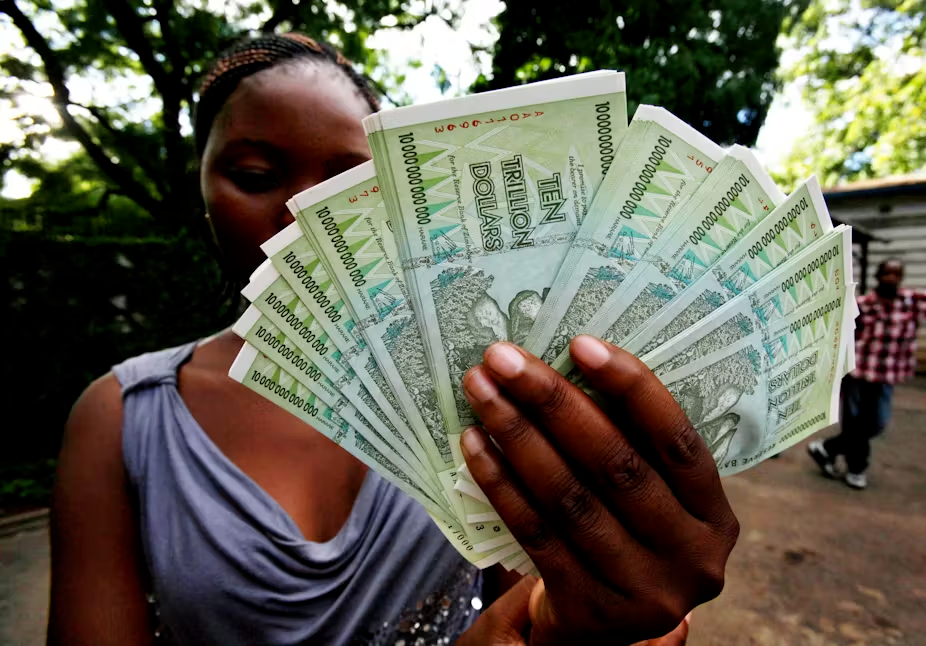
Imagine prices doubling or tripling within hours. That’s the grim reality Zimbabwe faced in 2008, a country grappling with the world’s highest hyperinflation (a staggering 79 billion percent!) and a collapsing currency. But how did this once-promising nation end up with a seemingly worthless piece of paper in its wallet? The answer isn’t as simple as printing too much money, it’s a tangled web of history, politics, and misfortune.
Seeds of Instability:
Like a neglected garden, Zimbabwe’s economic woes can be traced back to several overgrown problems. Controversial land redistribution programs in the early 2000s disrupted crucial agricultural production, slashing foreign exchange earnings and undermining economic stability. Meanwhile, Mugabe’s 37-year reign was marked by rampant corruption, excessive government spending, and policy inconsistencies that scared away investors and crippled growth. Droughts and international sanctions, while not the main actors, added fuel to the fire, further weakening the already fragile economy.
Hyperinflation Takes Center Stage:
By 2008, the Zimbabwean dollar was on life support, gasping for breath against hyperinflation’s monstrous grip. Prices skyrocketed, salaries became meaningless, and basic necessities turned into luxury items. People resorted to bartering, carrying around wheelbarrows full of cash just to buy a loaf of bread. It was a devastating period that scarred the nation’s memory and left its economy in tatters.
Dollarizing Reality:
Faced with this economic apocalypse, Zimbabwe made a drastic decision in 2009: it abandoned its own currency and adopted a multi-currency system, with the US dollar taking the throne. This move stabilized prices and brought back a semblance of normalcy, but it came at a cost. Imports became expensive, suffocating domestic industries, and the reliance on foreign currency left the economy vulnerable to external shocks.
The Ghost of Hyperinflation and a Fragile Future:
While the hyperinflation nightmare is over, Zimbabwe’s economic recovery remains sluggish. Inflation still bites at a hefty 175% (June 2023), unemployment is sky-high, and poverty plagues many. Robert Mugabe’s ZANU-PF party, accused of perpetuating the crisis, still holds significant power, raising questions about genuine reform and a shift towards economic stability.
Hope on the Horizon, or Just a Mirage?
The road to recovery for Zimbabwe is long and winding. It demands a multifaceted approach: political and economic reforms to attract investment and rebuild trust, tackling persistent issues like currency instability and inflation, reviving domestic production to generate foreign exchange, and restoring faith in the government’s ability to steer the nation towards a brighter future.
Zimbabwe’s story is a cautionary tale, a reminder that a nation’s currency is more than just paper; it’s a reflection of its economic health, political stability, and the hopes and dreams of its people. Only time will tell if Zimbabwe can rewrite its currency’s narrative, turning it from a symbol of collapse into a beacon of resilience and prosperity.
 BRYMO'S TAKE
Leave a comment