
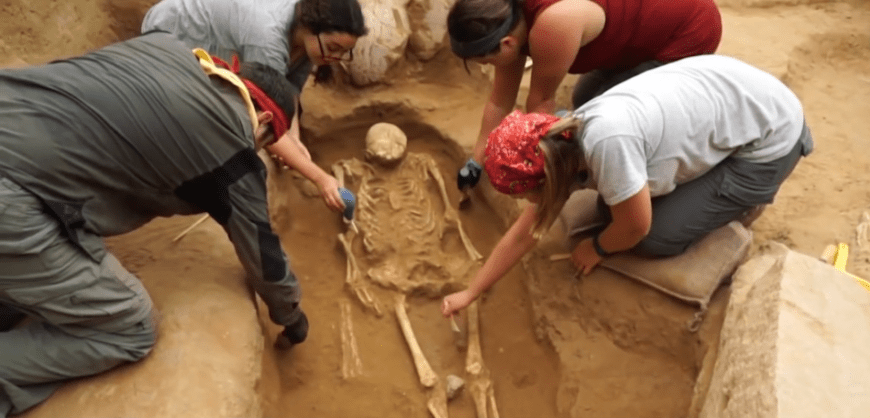
“Philistine” conjures images of biblical battles and Samson’s mighty deeds, while “Palestinian” evokes a complex contemporary reality. But are these terms connected? Is there a link between the ancient giants of the Old Testament and the people of present-day Palestine? Buckle up, history buffs, because we’re diving into a murky pool of names and timelines.
Pharaohs, Greeks, and a Lost Tribe:
Around 1200 BCE, the Mediterranean waves tossed a group called the Philistines onto the shores of Canaan. Hailing from somewhere in the Aegean, these iron-wielding warriors carved their kingdom, Philistia, along the southern coast. They clashed with the Israelites, making their mark on biblical narratives. But by the 3rd century BCE, they disappeared as a distinct entity, assimilated into the melting pot of the region.
From Philistia to Palestine:
Meanwhile, the Greeks arrived, wielding not swords but words. They called the whole region, including Philistia, “Palaistinê.” Why? Because that’s what the Hebrews called Philistia: “Peleshet” – Land of the Philistines. So, in a linguistic twist, the name of a vanished people stuck like barnacles, even after they were gone.
Romans, Reboots, and Modernity:
The Romans, ever practical, adopted the Greek term, calling their province in the area “Palestina.” And so, the name stretched beyond Philistia, encompassing Judea, Samaria, and beyond. Fast forward a couple of millennia, and “Palestine” became the geographical term for the land between the Mediterranean and the Jordan River.
Threads, Not Ties:
But here’s the crucial point: while the name “Palestine” echoes faintly with the Philistines, the people are not directly connected. Modern Palestinians have a rich tapestry of Arab, Canaanite, and other influences woven into their history. They are not, as some myths claim, simply the descendants of those ancient warriors.
Respecting Nuance, Embracing Complexity:
The history of the region is intricate, laden with sensitive narratives and contested interpretations. Using terms like “Philistine” and “Palestinian” requires awareness and respect. Their linguistic echo should not overshadow the distinct threads that make up the rich tapestry of the region’s past and present.
So, the next time you hear these names, remember: the connection is one of geography and echoes, not blood and lineage. Embrace the complexity, explore the nuances, and let’s continue unraveling the fascinating, and often challenging, threads of history together.
Feel free to share your thoughts, questions, and additional threads you’ve discovered in the comments below! Let’s keep the conversation going.
 BRYMO'S TAKE
Leave a comment