
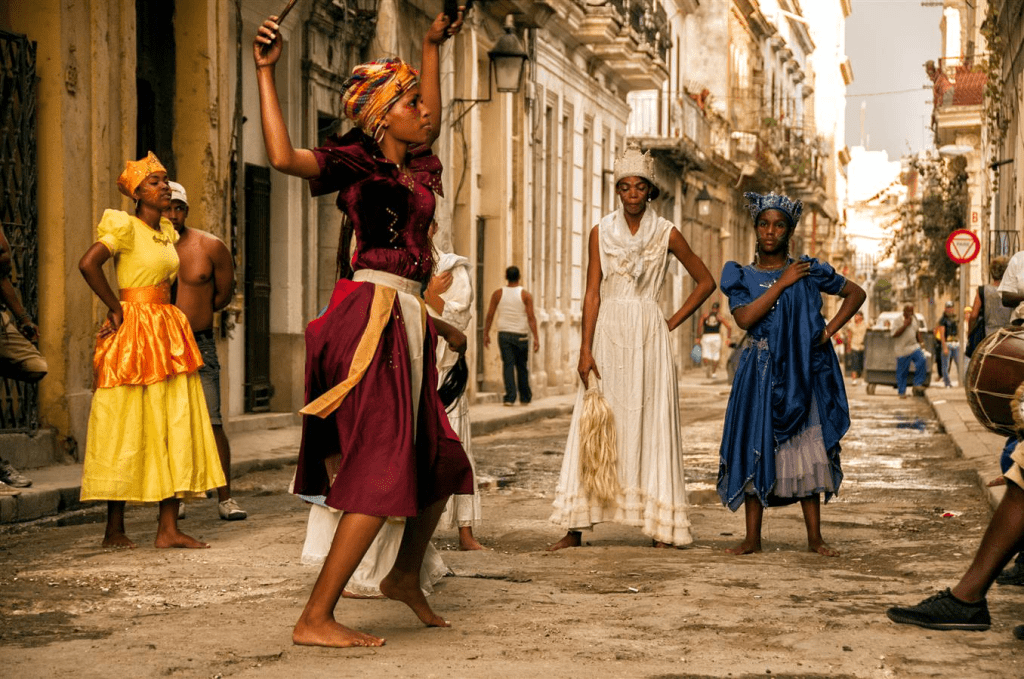
Millions of Nigerians and West Africans were forcibly brought to the Americas as slaves from the 16th to the 19th centuries. The enslaved were mostly from the Yoruba culture of what is today southwestern Nigeria and parts of Benin and Togo. In spite of harsh treatment and attempts to dismantle their culture and religion, the Yorubas have managed to retain their language, religion, and customs.
These slaves were treated very poorly. They were denied the right to practice their religion. And their children were ripped from their arms. Still, despite these brutal conditions, the Yorubas managed to build their own communities and preserve their customs. One way they did this was through their religion.
Resilience Through Religion
The Yoruba religion is centered around a group of spiritual deities called Orishas. Each deity has its own personality and powers. Many Yorubas believe that they can communicate with and receive help from the Orishas through prayer and rituals. In the Americas, the Yorubas blended their religion with Catholicism to create new belief systems, such as Candomblé in Brazil and Santeria in Cuba.
These syncretic religions became a way for the Yorubas to keep their culture alive. They also allowed them to resist slavery in a subtle way. For example, the Orishas could be seen as representations of African ancestors or forces of nature that could help the slaves overthrow their oppressors.
Preserving Language and Customs
The Yorubas also kept their language alive in the Americas. Yoruba languages, such as Lucumi in Cuba and Nagô in Brazil, continued to be spoken in homes and communities. Music, drumming, dance, and storytelling played crucial roles in transmitting cultural knowledge and maintaining a connection to their African roots.
Yoruba Culture as an official language in Brazil
There is even more good news in modern times. In 2002, the Brazilian city of Salvador da Bahia, where many people of Yoruba heritage live, made Yoruba an official language. This was a great honor for the Yoruba people and showed that their culture is still important in Brazil.
Lessons to be Learned from the Yorubas
The story of the Yorubas in the Americas is a story of resilience and hope. It shows us that even in the face of great adversity, it is possible to keep our culture alive. I have learned the following from the Yorubas:
- The importance of strong social structures and community support in maintaining cultural identity.
- The power of religious faith and spiritual practices in providing solace and fostering resistance.
- The significance of language and artistic expressions as vehicles for cultural transmission.
- The need for recognition and respect for diverse cultural heritages.
The Yorubas are an inspiration to us all. They show us that it is possible to overcome great obstacles and build a strong and vibrant culture.
What do you think of the Yorubas and their story? Do you have any thoughts on how we can preserve our own cultures? Please let me know in the comments below.
 BRYMO'S TAKE
Leave a comment