
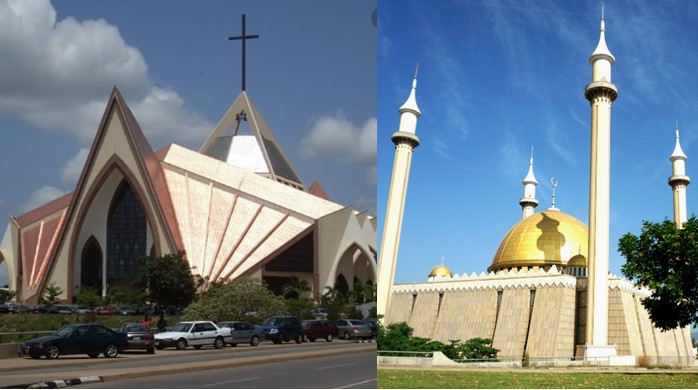
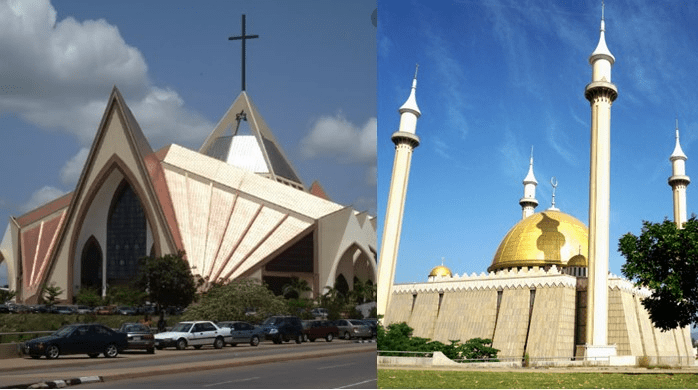
National Christian Centre, Abuja and National Mosque, Abuja, Nigeria.
Nigeria, a nation with a population split roughly 50% between Muslims and Christians, has a rich history of religious tolerance and pluralism. Despite this, the country has experienced periods of tension and violence between these two major religious groups. In 2023, the All Progressives Congress (APC) made history by nominating Bola Tinubu, a Muslim, for president, and Kashim Shettima, another Muslim, for vice president. This marked the first time a major political party in Nigeria fielded a Muslim-Muslim ticket for the nation’s top leadership roles since 1999.
Does the Muslim-Muslim Ticket Really Matter?
The decision to present a Muslim-Muslim ticket for the presidential election sparked various perspectives among Nigerians. Some argue that it represents a positive stride towards religious tolerance and pluralism in Nigeria. They assert that the APC’s decision underscores a commitment to selecting candidates based on their merit and qualifications, rather than their religious affiliation.
However, concerns exist among those who worry that the Muslim-Muslim ticket could alienate Christian voters and potentially escalate religious tensions. There is also the apprehension that such a choice could convey the message that the APC is showing favoritism towards one religious group over another. These differing opinions reflect the complex dynamics of Nigeria’s religious landscape.
How Does This Affect Their Discharge of Duty, Dividend of Democracy, and National Cohesion?
Determining the impact of the Muslim-Muslim ticket on the discharge of duty, dividend of democracy, and national cohesion is not straightforward. While it may contribute to a more inclusive and tolerant government, there is a potential risk of increased religious tensions, which could hinder progress and national unity.
It’s essential to recognize that the religious affiliation of the president and vice president is just one factor influencing their performance. Other crucial factors include their competence, experience, and policies. Therefore, it’s crucial to evaluate the entire administration’s actions rather than solely focusing on the religious background of its leaders.
Is There Any Danger Ahead and Precedence?
Nigeria has always faced the threat of religious tensions and violence, irrespective of the religious affiliation of its leaders. However, the Muslim-Muslim ticket may heighten this risk, especially if it is perceived as a sign of religious bias within the government.
Notably, there is no precedent for a Muslim-Muslim ticket in Nigerian presidential elections. Historically, there have been instances of Muslim-Christian tickets, such as the 2015 election won by Muhammadu Buhari, which featured a Muslim president and a Christian vice president.
Conclusion:
The introduction of a Muslim-Muslim ticket in Nigerian politics is a significant development that has sparked diverse opinions and concerns. It remains uncertain how this decision will impact the nation in terms of governance, national unity, and religious tolerance. While it has the potential to foster inclusivity, it also carries the risk of exacerbating religious tensions.
As the political landscape unfolds, it is crucial for Nigerians to closely monitor developments and advocate for religious tolerance and pluralism. Ultimately, the success of any government should be measured by its ability to deliver on its promises, ensure democratic dividends, and promote national cohesion, irrespective of the religious background of its leaders.
 BRYMO'S TAKE
Leave a comment