
Climate change is an undeniable global crisis, and its impacts are felt far and wide. However, it is particularly devastating for developing African countries. These nations are not only disproportionately vulnerable to climate change but have also contributed very little to the problem in terms of greenhouse gas emissions.
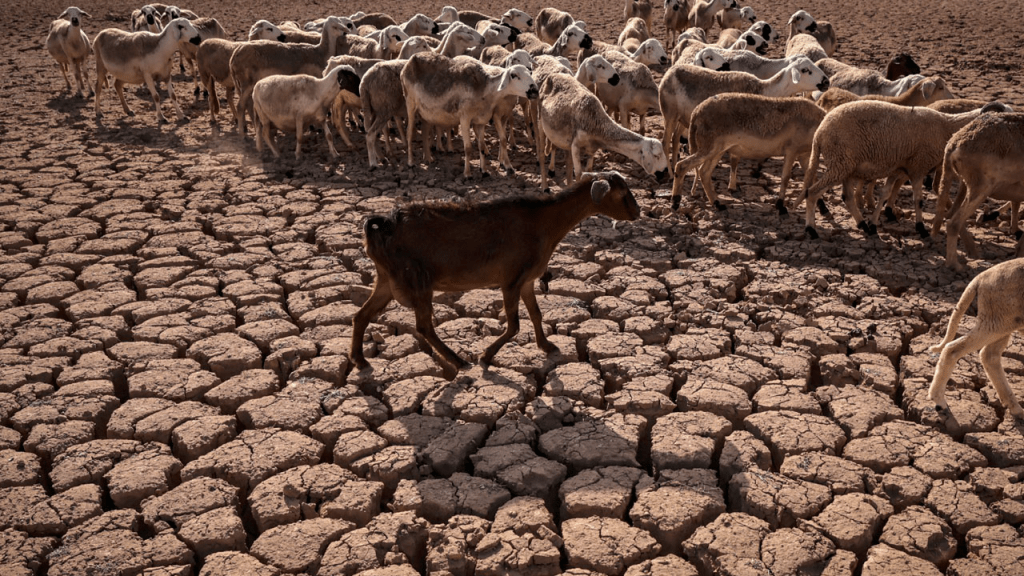
In Morocco’s worst drought in at least four decades, a herd of sheep walks across cracked earth at al-Massira dam in Ouled Essi Masseoud hamlet, 140 kilometres (85 miles) south of Casablanca on August 8, 2022. Source: The Guardian Nigeria News (Photo by FADEL SENNA / AFP) Source: The Guardian Nigeria News – Nigeria
African Vulnerability to Climate Change
The effects of climate change, such as prolonged droughts, devastating floods, and rising sea levels, pose significant threats to Africa’s agriculture, food security, and livelihoods. These impacts have far-reaching consequences for the continent’s economies and well-being. It is crucial to recognize that Africa’s emissions are just a fraction of the global total, accounting for a mere 3.8%. Despite this minimal contribution to the problem, Africans are bearing the brunt of its consequences.
The Role of African Governments in Climate Change Mitigation
Governments in Africa can play a pivotal role in addressing the challenge of climate change. Here are some specific actions they can take:
Invest in Renewable Energy: African nations can promote the use of renewable energy sources like solar and wind power. By transitioning to clean energy, they can reduce greenhouse gas emissions while also increasing resilience to climate change impacts.
Promote Sustainable Agriculture: Encouraging sustainable agricultural practices, including crop rotation and water conservation, can enhance food security and reduce the vulnerability of African farmers to climate change-induced disruptions.
Protect and Restore Forests: Forests act as natural carbon sinks, absorbing carbon dioxide from the atmosphere. Governments can protect existing forests and embark on reforestation efforts to mitigate climate change while safeguarding biodiversity.
Educate the Public: Raising awareness about climate change and its impacts is essential. African governments can educate their citizens about the problem and motivate them to reduce their carbon footprint through sustainable lifestyle choices.
Support Climate Change Adaptation: Investing in adaptation measures such as building seawalls to shield coastal communities from flooding is vital. This helps to minimize the vulnerability of African populations to the immediate effects of climate change.
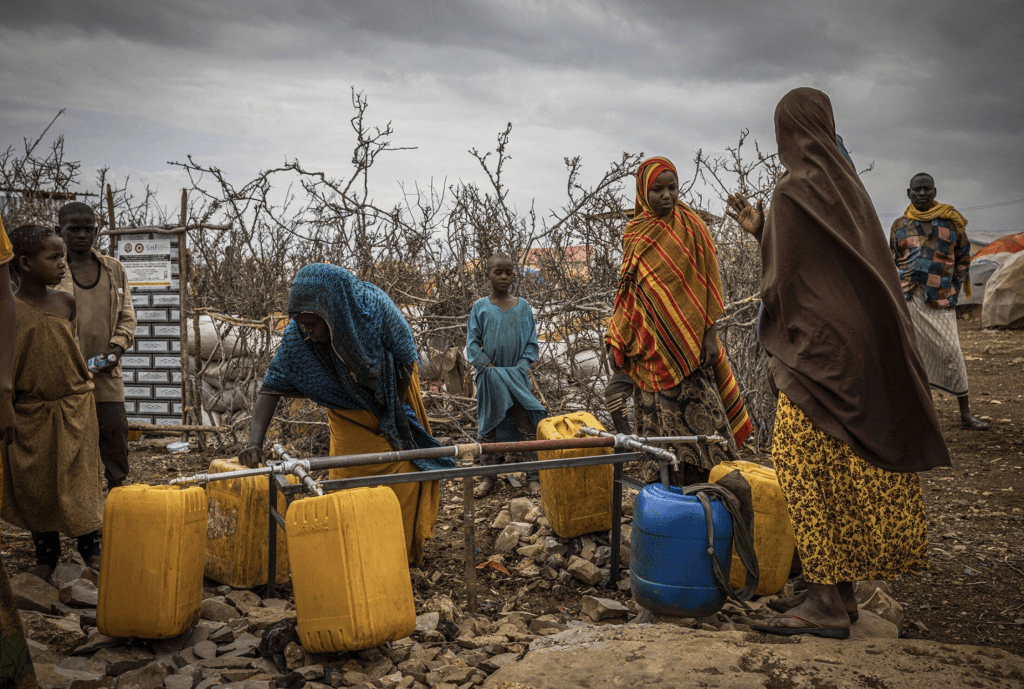
A drought-affected displacement camp in Baidoa, Somalia, in September 2022. Sources: BLOOMBERG (primary) and The Japan Times (secondary)
A Collaborative Effort
While African governments can play a critical role, addressing climate change is a global effort that requires cooperation among all stakeholders, including governments, businesses, and individuals. Developing African countries may require assistance and support from the international community to implement these strategies effectively. Additionally, fostering sustainable development and economic growth while reducing carbon emissions is a delicate balance that requires careful planning and international collaboration.
In conclusion, climate change poses an immense challenge to developing African countries, despite their minimal contribution to global emissions. Governments in Africa can lead the way in addressing this crisis by investing in renewable energy, promoting sustainable agriculture, protecting forests, educating the public, and supporting climate change adaptation measures. Through concerted efforts, African nations can mitigate the effects of climate change and protect their citizens’ well-being and future generations.
 BRYMO'S TAKE
Leave a comment